BS (Data Science)
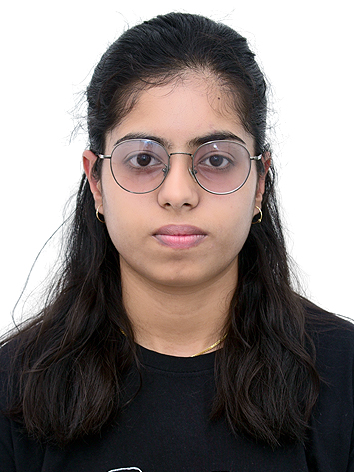
Shagun Dwivedi’s academic journey does not follow a straight line, and that is exactly what makes it special. While she was deeply interested in computer science, she knew early on that a conventional engineering degree was not the path she wanted to take. At the same time, she was equally drawn to history and the social sciences. When she discovered the IITM BS Degree in Data Science and Applications, it felt like the missing piece she had been searching for – a program that offered modern, industry-relevant learning without limiting her curiosity.
At the time, the BS degree required students to be enrolled in an on-campus program. Instead of choosing another technical course, Shagun made a deliberate and thoughtful choice.
She enrolled in a BA Honours program in Ancient Indian History and Archaeology at the Lucknow University alongside the BS degree. This decision allowed her to explore two completely different worlds – one rooted in the past; and the other focused on emerging technologies – without repeating the same academic space.
Managing two degrees in parallel was demanding. Some weeks meant offline exams on weekdays and OPPEs or finals over the weekend. One particularly intense phase came during an archaeology seminar that ran all week while the MAD project was in its final phase. Shagun would code early in the morning, attend seminars throughout the day, and return to her project late at night. It was hectic, but enjoyable – and it taught her the value of routine, discipline, and managing time under pressure.
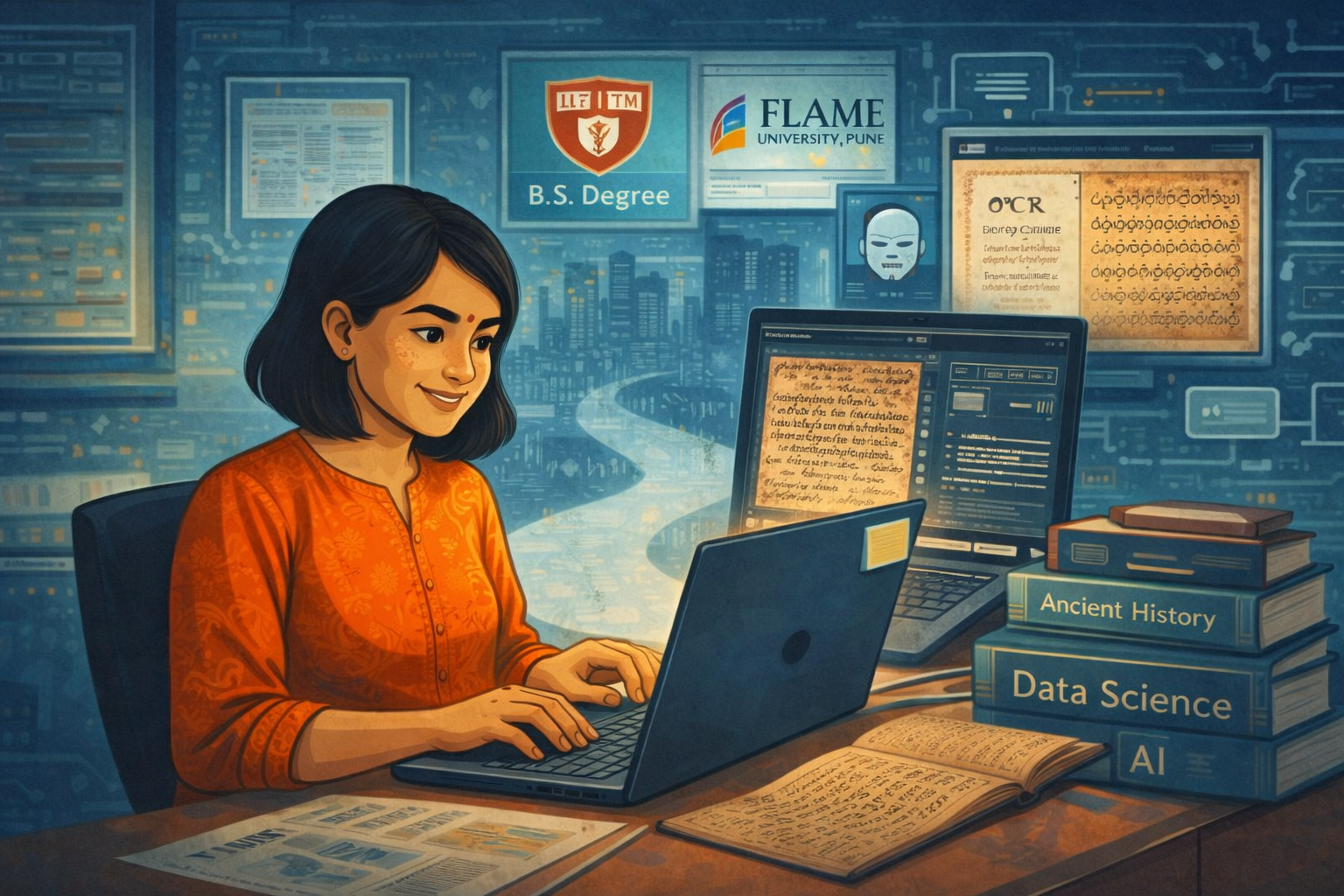
The impact of the BS degree became especially clear as she moved into professional work. Today, Shagun works as a researcher at the Centre for AI at FLAME University, Pune, building OCR (Optical Character Recognition) systems for pre-colonial manuscripts in rare ancient scripts. The role perfectly blends her background in history with her training in data science. She credits the BS degree for equipping her with the technical foundation needed to enter this field, noting that several of her colleagues also come from the same program.
Beyond academics, Shagun actively engaged with the BS student community. She was part of Sahityka, the Literary Society of IITM BS Degree, where she led the Editorial and Documentation team. She helped organise and host cultural events across multiple editions of Paradox and the inter-collegiate event Minerva. These experiences marked her first independent travels to Paradox and helped her build lasting friendships, making the npn-campus degree feel truly personal.
That same involvement soon led her to new challenges. During Paradox in Margazhi 2024, Shagun participated in the Hack4Change hackathon with a friend and secured the first runner-up position. Managing event responsibilities alongside a one-day build sprint was intense yet exciting. The collaboration continued beyond Paradox, with the duo later winning the Adobe Express Add-on Hackathon.
Reflecting on the program, Shagun highlights the up-to-date syllabus, engaging faculty, and well-designed lectures as major strengths. She particularly appreciated the OPPE system and group projects, which allowed her to apply concepts in practical settings. Financially, the degree was supported through a full scholarship, along with her role as a TA (Teaching Assistant) for MAD 1 and MAD 2 vivas.
In the span of about a year and a half, Shagun has published 4 research papers in AI and is now applying to PhD programs abroad, with a focus on NLP.
As she looks ahead, her advice to current and prospective students is simple: stay curious and keep learning. For her, the BS Degree has been more than an academic program – it has been a meaningful bridge between her interests in history and her future in AI.
– written by Pushpanjali