BS (Data Science)
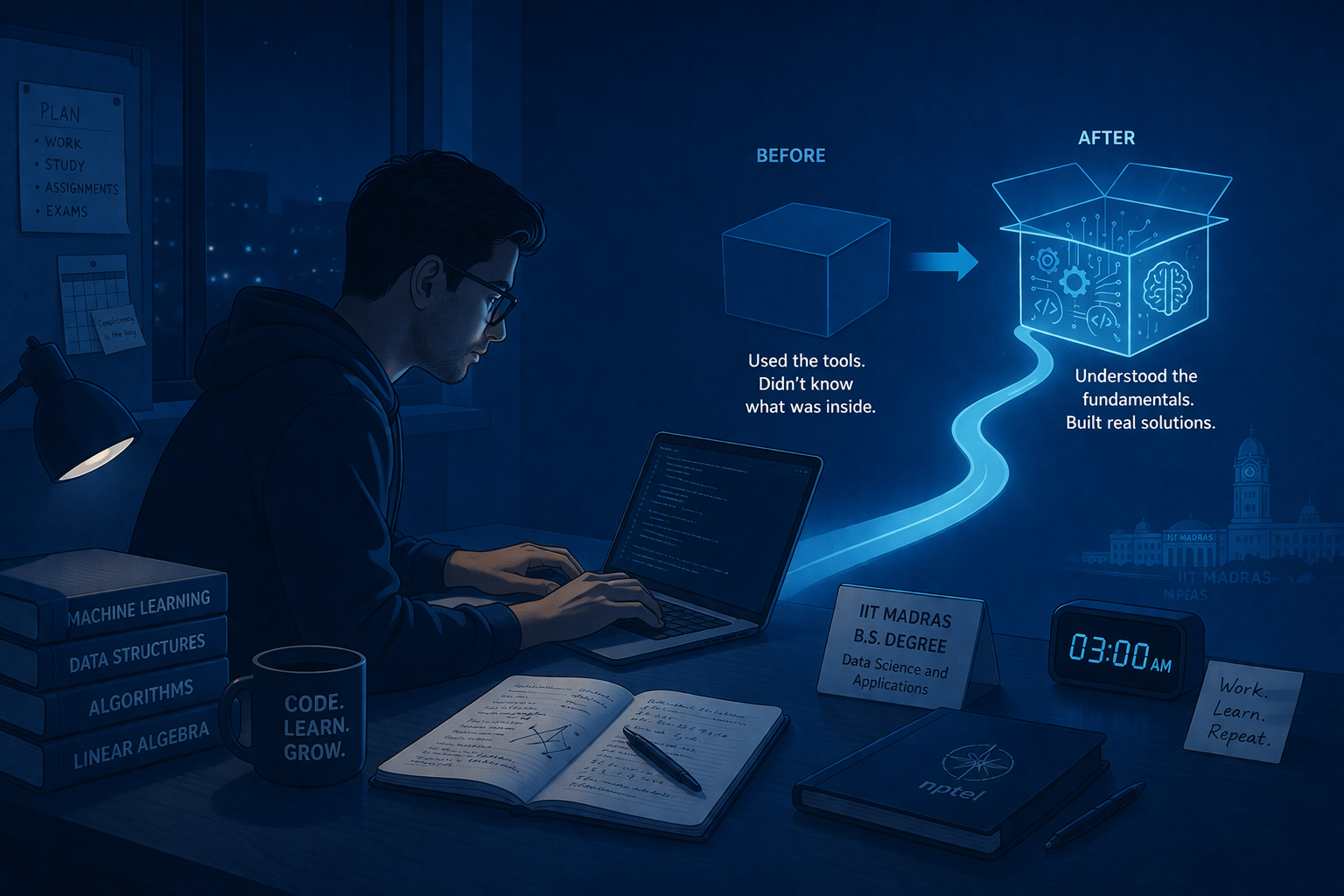
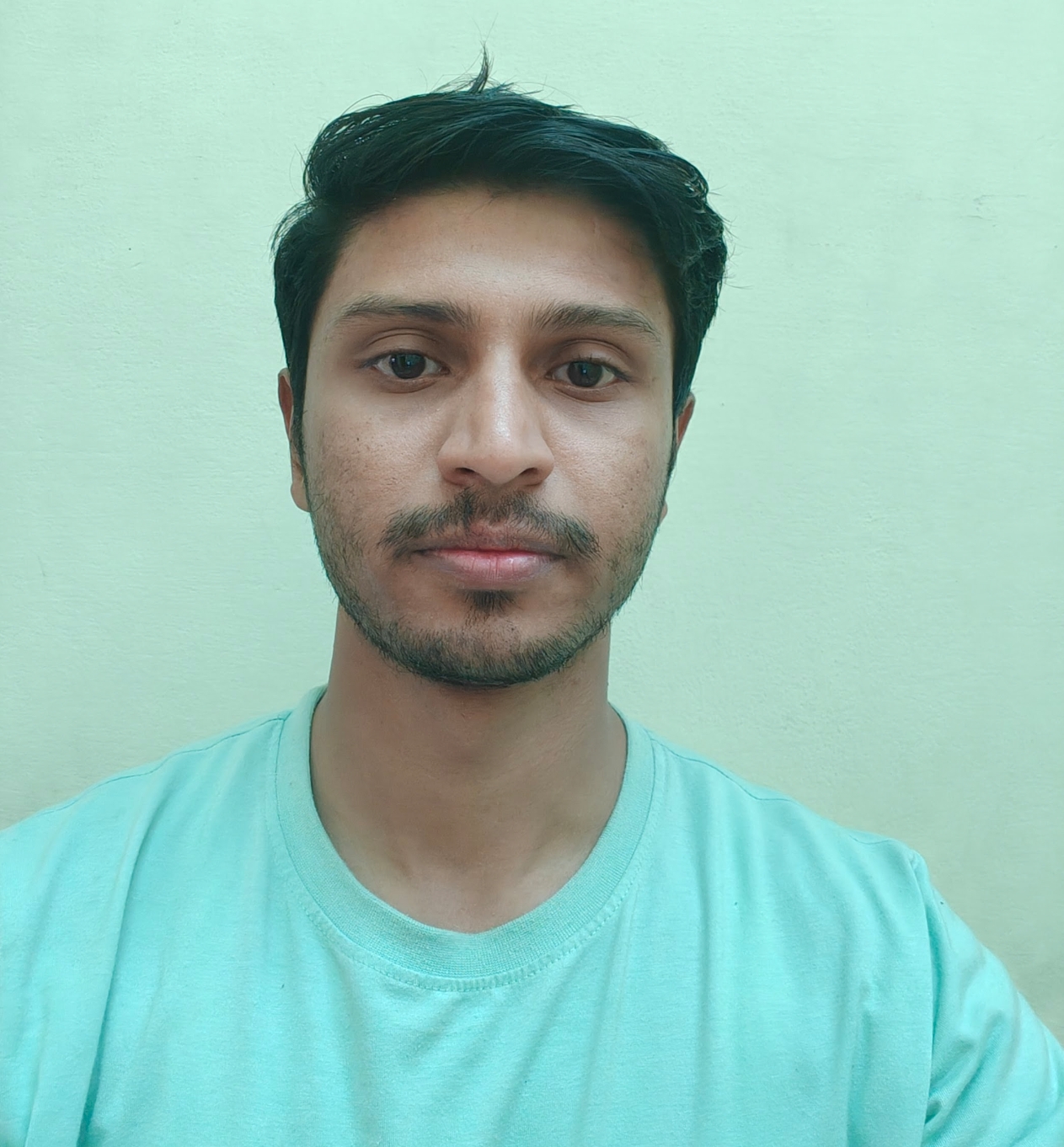
When Aniket Kalra was pursuing the IIT Madras BS Degree in Data Science and Applications, there were nights when he would look up from his laptop and it would be 3 AM, and he had to be at the office in a few hours. He’d been a working professional at a defence organisation for years – a robotics engineer who knew his field well enough to get the job done. But something had been nagging him – he was using tools he didn’t fully understand, operating a box without knowing what was inside it. So he enrolled in the degree, and then he coded till 3 AM on most days, and then he went to work. Because for Aniket, understanding was worth the sleep deprivation.
The gap that bothered him was specific, “Before, I knew that there was a model, and we have to feed the images and it will give some results,” he says. “I didn’t know how it was working. But after joining this degree, I got to know what machine learning is, and what are the fundamentals.”
He still remembers the excitement of his first weeks in the degree. He was mid-shift at the office when he remembered an assignment was due. He then took a half day leave, submitted it, and went back to work. “That was a different kind of excitement,” he says, smiling at the memory, and it set the tone for everything that followed.
What followed was exhausting, to say the least. He worked a nine to five job, then came back home and studied through the night, surviving on two or three cups of coffee and a couple of hours of sleep. No time for societies. No time for the events that define the degree for most students. He just didn’t have the bandwidth. Yet, it meant something to him.
“When you begin to value the rigour,” he says, “it starts to feel like a meaningful learning process.”
The degree, he’ll tell you, isn’t built for the faint-hearted regardless of your circumstances. Consistency is non-negotiable, miss one day and you spend the next three catching up. Aniket sees this clearly now in the interns he manages at work.
“Whenever we assign something to them, they are not committed fully,” he says. “This degree pushes you to commit; it makes you think and try different approaches.”
Aniket is currently in the M.Tech level of the degree, and he’s looking forward to a significant career leap that he credits to the degree and the five years of professional experience, with the gaps that the degree helped fill in. “Those things combined made it possible,” he says.
His advice to anyone considering the degree is less about strategy and more about orientation. “Stop chasing the package,” he says. “Stop optimising for syntax and start thinking about problems; real ones, the kind that exist in the world outside the screen.” He knew how to use the box long before he enrolled. He could feed it inputs and read its outputs and do his job well enough. What the degree gave him was something much more meaningful – the understanding of what was actually happening inside. Some people do this degree to open doors, but Aniket did it to finally see what was behind one he’d been standing in front of for years.
– written by Nikita Nanduri